Jun 15
2026
Author Interview: Charli Battersby, Choice of Games author
Posted by: K L |
Happy Pride! Choice of Games is proud to be gender-inclusive and LGBTQ+-affirming all year round, but during the month of June, we’re featuring writers whose work connects especially closely with those themes.
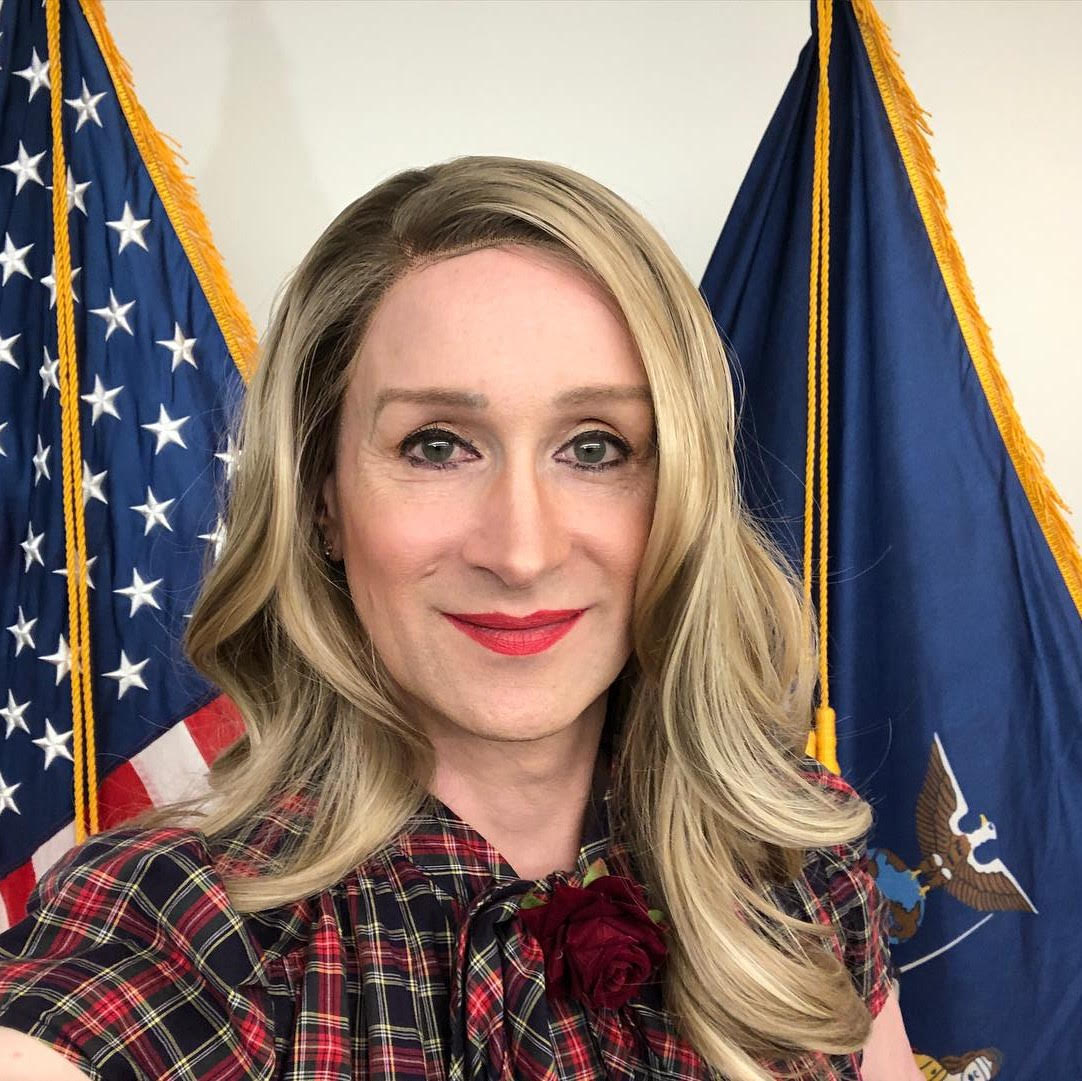
Today we’re sitting down with Charli Battersby, author of Kidnapped: A Royal Birthday and Cheerleader’s Choice: New York Spirit.
Cheerleading is an environment that can sometimes be very heteronormative, but can also play with ideas about gender. How did you approach those issues when you were writing Cheerleader’s Choice?
Female cheerleading is definitely heteronormative. Even on LGBT teams. And male cheerleading used to be heteronormative too. In fact the first cheerleaders were all-male teams, and it was very manly to put on your school colors and cheer for your fellow manly heterosexual men.
Now there’s a stereotype that all male cheerleaders are gay; which was pretty much true on the teams that I was on. I knew one straight male cheerleader and a handful of bisexuals. The rest were gay, but many of them are big, burly athletes who definitely refute the stereotype of effeminate gay men. I’ve known a couple who are built like football players. In Cheerleader’s Choice some of the men are real bruisers, and they are partially based on real people. The Pink Titan is based on a seven foot tall drag queen who performed at a cheer fundraiser I attended at The Stonewall. He’s a really nice guy, but I wouldn’t want to go up against him in the Thunderdome.
For my fictional team, I made it a little more diverse than you’d see in the real world. Even on LGBT cheer teams the straight female “Allies” vastly outnumber the lesbians. And there’s always been a problem with LGBT organizations, in that bisexuals are tolerated but often unwelcome. Especially bi men who are currently dating a woman.
So my fictional team, New York Spirit, has a couple of prominent characters who are canonically bisexual, and one character who’s canonically a lesbian. Many of the other characters don’t directly state their sexuality, so the player can imagine what they like.
As for gender and cheerleading… That’s a bigger issue for me. And it’s something that is hard to have an honest conversation about. When I started cheerleading in 2017, I was the only trans person on my LGBT team. They’d been around for 15 years before I showed up (Uninvited) to try outs.
There are often gay male cheerleaders who dress up in women’s uniforms as a joke, but trans cheerleaders were extremely rare until recently. After I quit my first team, they rapidly acquired a replacement token trans person, who was kicked off the team two years later. This year they forgot to make a post about Trans Day of Visibility, so I’m not optimistic about them learning any lessons.
“Trans Rights” is a less fashionable cause these days. I think a lot of politicians and athletic organizations will flip-flop about allowing transwomen on them. And many trans people will stop publicly identifying as trans once the backstabbers start sharpening their knives. I do know a few athletic organizations that are on the vanguard of the fight, so I think there will always be a place for trans athletes, if we look hard enough.
The character Rikki in my game represents all of the rage and resentment that I have towards the hypocrisy of certain former-teammates. And, the character Olivia is a composite of all the fake allies I knew. There is a very cathartic scene near the end of the game…
You’ve played a lot in dystopian settings: not only does Cheerleader’s Choice have a surprisingly dark sense of humor and a dystopian setting, you’ve also written a stage play set in a bunker after a nuclear apocalypse, and you co-created an animated series set in the Fallout world. What draws you to dystopia? What kinds of stories can you tell there that you can’t in other settings?
At a glance it might look like “Heated Rivalry with cheerleaders.” But it’s more like “Watchmen meets The Warriors.”
If you like dystopian comedy in the vein of Terry Gilliam, Paul Verhoeven, or Kurt Vonnegut, you’ll be able to appreciate the game as social satire. The cheerleaders are trying to be optimistic as the world burns around them. Look close at the game’s cover art, and that’s literally what’s happening.
It’s written so that you can come into it with no preexisting knowledge of cheerleading. You can even play a character who hates cheerleaders.
But it’s also a personal love letter to the sport of cheerleading. Probably not appropriate for your tween daughter… but cheer moms and cheer dads will love it!
I’m a lifelong fan of dystopian and post-apocalyptic stories. Sometimes these dystopias inadvertently seem better than the real world. That was a problem with this game; the real New York was getting increasingly absurd over the years the game was in development. I couldn’t make up political scandals fast enough to outpace the real ones!
My play That Cute Radioactive Couple is a very dark comedy about a married couple trapped in a “Bachelor Bunker” built for one person. And it was written several years before the COVID pandemic. The lockdowns forced a lot of real couples into that exact situation. The characters are a loving couple trying to accept their deaths, and specifically how they want their spouse to die too. Do they starve to death together in the bunker? Should one of them commit suicide so the other can live a little longer? Would you want to die first in your marriage, and leave your spouse alone, or would it be more selfless to be the one who lives?
Also, I assure you, it IS a comedy.
That play got me the job at Shoddycast. I’m the writer and co-creator of their The Storyteller: Fallout series. Which is a project I dearly love. I still run into people who watch it ten years after it was released. I love meeting the fans in random places!
And I was delighted that some of the voice cast from the Fallout games agreed to reprise their characters for us. Hearing Courtenay Taylor, and Wes Johnson, and Erik Dellums performing dialog that I wrote, that was a dream come true for me as a fan!
I’ll smugly boast that Shoddycast’s Fallout show has a higher rating on IMDB than Amazon’s Fallout show. And that’s because it was made with love by fans, for fans.
As for stories that I can tell in a dystopian settings… These are great for stories where the protagonist is the only sane person in the world. Like Winston Smith in 1984, where he seems like the only person who understands that this is not how the world is supposed to be. The thing that keeps the real world from genuinely becoming a sci-fi stories is that lots of people understand that this is not how it’s supposed to be.
When we blindly accept “The New Normal” that’s when we’re on the fast track to Soylent Green.
So I like to write comedies about living in a dystopia. You can either laugh about it, or you can run amok with an ax.
In addition to being a writer and game designer, you’re also an actor! Your blog about being a background actor is wonderfully informative and hilarious. What’s one thing that you think would surprise people about being a background actor?
On the blog I constantly talk about the food on a movie set! It can be a very glamorous experience portraying the role of “Nondescript Pedestrian #78.” Even when you’re an extra, you can get the movie star treatment. Catered meals, a glam squad doing your hair and makeup. I even had my own trailer once, just because I had ONE LINE on a TV show.
And since this is a Pride Month piece, here’s a bonus surprise. You’d be astonished how hard it is for transwomen to get cast as extras. At least as anything besides “LGBT type,” and “Trans Hooker.”
My blog chronicles how I’ve taken multiple casting companies to court just so I can play “Blurry Pedestrian #200.” I have had to file seven different human rights cases over this. The industry likes to have high-profile trans representation as guest stars, and principal cast. But they don’t care about trans extras and Stand Ins.
G.L.A.A.D. doesn’t hand out awards for having trans extras in a big blurry crowd.
And no, the casting company that casts the Fallout TV series wouldn’t let me work on that show. I’ve also never been cast as a cheerleader. But it’s gotten a little better since I started taking people to court over this issue. I’ll be cast as “Cheerleader #6” or “Vault Dweller #21” eventually.
We’re asking all of our authors this: How has your representation of LGBTQ+ themes in your writing evolved over the course of your career?
I’ve been openly trans since the 1990s and working as a writer for that long too. Back then you did not get a medal for being the first openly trans person at your job. You got fired.
Writing a single trans character in a project was controversial. I’d constantly hear, “That’s denying a role to a real woman” or “This isn’t a drag show.”
I’d sneak around that by including a female character who could be trans, and then I’d play the role myself.
Nowadays, everyone’s shoehorning trans characters into their stories, so I try to be the irreverent court jester and say things that I don’t think a cis-gender person could say. In Cheerleader’s Choice the trans cheerleader, Rikki, goes berserk several times and engages in violence towards gay men and fake allies.
The “Violent Trans” stereotype is something that’s hard for anyone to talk about; the game came out right in the middle of a series of shootings and stabbings committed by trans people, so I think other writers are afraid to address the fact that a lot of trans people, including me, have intense rage.
Again, we can laugh about it, or we can run amok with axes.
There’s also a scene in my game where a villain disguises himself as a drag queen, then the heroes chase him through the West Village and get in a brutal fight, while constantly screaming “We’re not committing a hate crime!”
A lot of writers would never write something like that. But I haven’t heard any complaints about that scene.
There is another scene that I debated removing from the game because it tackles a very serious issue that trans people aren’t supposed to talk about. One of my fictional cheerleaders has an unstable gender identity; it’s never directly stated if she’s trans or not. But there’s a scene where the canonically trans character says, “People like her make people like me look crazy.”
The player has to choose how to address this. It’s one of several scenes involving trans characters where there isn’t a simple solution. There is a lot of division within the LGBT community, and even within the trans community itself, but few writers address it.
From a game mechanics perspective, I include a dialog option early in the game where the player can say that they don’t have “Gaydar” and can never tell when someone’s gay. If you choose this, you’ll have special dialog options where your character doesn’t realize that you’re on an LGBT team. This is intended for laughs, but I suspect some players will use it un-ironically.
And if you’re trans, your character has a “Transponder” instead of Gaydar which gives you special lines of narrative and dialog that even the gay characters won’t see.
Finally: how are you celebrating Pride this year?
I’ll be in the Coney Island Mermaid Parade for sure. And still scrubbing off the glitter in July.
 Steam
Steam Twitter
 Facebook
 Tumblr
 RSS Feed


Start the discussion at forum.choiceofgames.com