Enter the court of Henry VIII of England, and lead the country through the reformation. Politics, religion, love, and war in 16th Century England. It’s 33% off until February 22nd!
Tudor Intrigue is a 175,000 word interactive historical novel by James Young, where your choices control the story. It’s entirely text-based—without graphics or sound effects—and fueled by the vast, unstoppable power of your imagination.
• Play as a nobleman or noblewoman.
• Change the religion of England.
• Mary the King.
• Make alliances and maneuver in court.
• Take part in high stakes trials.
• Seize the Crown for yourself.
James Young developed this game using ChoiceScript, a simple programming language for writing multiple-choice interactive novels like these. Writing games with ChoiceScript is easy and fun, even for authors with no programming experience. Write your own game and Hosted Games will publish it for you, giving you a share of the revenue your game produces.
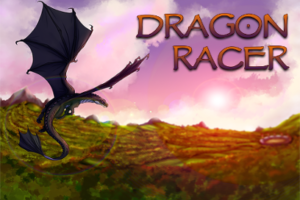
Ever since you were a child, you dreamed of flying amongst other racers with your dragon, and so, when the chance came to become one, you leaped for it. But, things are not always so simple. It’s 25% off until February 7th!
Dragon Racer is a 420,000 word interactive fantasy novel by Tierra Wright, where your choices control the story. It’s entirely text-based—without graphics or sound effects—and fueled by the vast, unstoppable power of your imagination.
Will you show all of those who doubt you that you have what it takes to ride with the greatest dragon racers? Will you form bonds with them, stronger than you ever thought possible, or will you use those around you to simply push your own agenda?
• Play as male, female, or non-binary; gay, straight, or bi.
• Name your dragon, and help shape his personality.
• Train your dragon in three different areas of racing.
• Fly you dragon in many different racing events.
• Learn the truth about your past and uncover the secrets of Abauruth.
Tierra Wright developed this game using ChoiceScript, a simple programming language for writing multiple-choice interactive novels like these. Writing games with ChoiceScript is easy and fun, even for authors with no programming experience. Write your own game and Hosted Games will publish it for you, giving you a share of the revenue your game produces.
No one mentioned saving the world at freshman orientation, but you still can’t decide if the worst part of college is the essays or the demons. It’s 25% off until January 31th!
Keeper of the Sun and Moon is a 310,000 word interactive fantasy novel by Brynn Chernosky, where your choices control the story. It’s entirely text-based—without graphics or sound effects—and fueled by the vast, unstoppable power of your imagination.
You knew your school year was off to a rocky start when you were attacked by a gorgon. Whisked away to New World Magi Academy, you’re thrown into life at a college for supernatural in the midst of unprecedented turmoil in the city. There’s a war brewing between angels and demons in New Magi City—and the theft of the powerful celestial artifacts does nothing to abate tensions…
• Play as male, female, or non-binary; gay, straight, bi, or asexual.
• Romance one of ten love interests, from a cute shifter to a snarky telepath.
• Experience life as one of seven unique species as you learn to control your powers.
• Choose your classes for each semester, from Telekinesis to Sigils and Runes.
• Discover the secrets of New Magi City, and become involved in the intrigue yourself.
• Delve into a forgotten mystery to uncover the secrets of the Dragon Massacre.
• Stop the artifact thief from taking control of the city, or aid them along the way.
Brynn Chernosky developed this game using ChoiceScript, a simple programming language for writing multiple-choice interactive novels like these. Writing games with ChoiceScript is easy and fun, even for authors with no programming experience. Write your own game and Hosted Games will publish it for you, giving you a share of the revenue your game produces.
The Romans call you many names. A slave. A gladiator. A champion. Who and what will you be? You decide. Conquer the arena, navigate petty Roman politics and etch your name in the annals of Rome! Or die trying. It’s 25% off until January 24th!
Gladiator: Road to the Colosseum is a 220,000 word interactive novel by Foong Yi Zhuan, where your choices control the story. It’s entirely text-based—without graphics or sound effects—and fueled by the vast, unstoppable power of your imagination.
• Play as male or female; gay or straight.
• Battles against slaves, gladiators and even wild animals!
• Manage relationships with your friends and enemies, rig a vote or poison a foe!
• Navigate the complicated (and petty) politics of the Roman Senators.
• Unique character tracking system and story that makes each playthrough different!
• Find love amidst the madness of the arena, even in the most desperate of places!
• Fight your way to the Colosseum, through the greatest games the world has ever seen!
Fight for your freedom and etch your name in the annals of Rome!
Foong Yi Zhuan developed this game using ChoiceScript, a simple programming language for writing multiple-choice interactive novels like these. Writing games with ChoiceScript is easy and fun, even for authors with no programming experience. Write your own game and Hosted Games will publish it for you, giving you a share of the revenue your game produces.
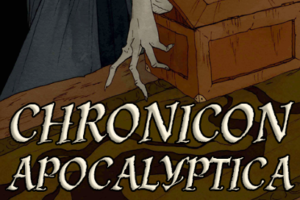
We’re proud to announce that Chronicon Apocalyptica, the latest in our popular “Choice of Games” line of multiple-choice interactive-fiction games, is now available for Steam, Android, and on iOS in the Choice of Games Omnibus app. It’s 33% off until January 18th!
Battle Norse raiders, ghosts, and changelings to save medieval England! But beware, if the elves can capture the Book you hold, the world will end.
Chronicon Apocalyptica is a 250,000-word interactive medieval fantasy novel by Robert Davis. It’s entirely text-based, without graphics or sound effects, and fueled by the vast, unstoppable power of your imagination.
You are an Anglo-Saxon scribe in the year 1000. You hold a Book of secrets written generations ago, including this prophecy: “When Æthelred II is King, he shall not be King, but there shall be an elven changeling in his stead. Should it gain this book and its ink, the world he shall rend asunder.”
The witan advisors to Æthelred have tasked you with a secret mission to research whether the Book is true. Build an unlikely party of adventurers: a nun, a holy warrior, a bard, a beekeeper, and his bee, each with a mysterious past. Judge a witch trial, infiltrate the magical land of the elves, and even travel through time on your quest to extract fact from fiction.
Lovers of England’s mythic history will delight as you meet Excalibur, the Green Children of Woolpit, and the Tremulous Hand, a creepy disembodied hand with a predilection for parchment. Put your analytical, investigative, and storytelling skills to the test as you decide where your loyalties lie: to the church, the crown, or the people of England.
Will you uncover the secret at the heart of English history, or succumb to the evil of the most deadly book ever created?
• Play as male, female, or non-binary; gay, straight, bi, or asexual.
• Discover rare sources, excavate ruins, and collect local legends.
• Fight the forces of darkness, or outwit them with your sharp intelligence.
• Explore decaying strongholds, funeral barrows, and even time itself.
• Choose romance or rivalry with your greatest foe.
• Determine who sits on the English throne.
We hope you enjoy playing Chronicon Apocalyptica. We encourage you to tell your friends about it, and recommend the game on Facebook, Twitter, Tumblr, and other sites. Don’t forget: our initial download rate determines our ranking on the App Store. The more times you download in the first week, the better our games will rank.
Battle Norse raiders, ghosts, and changelings to save medieval England! But beware, if the elves can capture the Book you hold, the world will end. Chronicon Apocalyptica is a 250,000-word interactive medieval fantasy novel by Robert Davis, author of Broadway: 1849. I sat down with Robert to talk about medieval fantasy, and the joy and challenges of writing it. Chronicon Apocalyptica releases this Thursday, January 10th.
This is a huge departure from Broadway: 1849, your first game with us. Tell me about what led you to develop Chronicon Apocalyptica and why it’s so different.
To be honest, I have no idea where Chronicon came from! There was this one week I was reading the Venerable Bede, playing a board game where you are a gnomish librarian, and listening to a podcast about medieval mysteries, and, at some point, I thought, “all this should be in a game.”
Broadway was modeled on nineteenth century melodrama. Chronicon Apocalyptica (“The Chronicle of the Apocalypse”) is much much weirder. Taking place in the year 1000, it has labyrinthine mysteries and heaps of possibilities, because I see history as a really twisted, rambling place. I mean, in one game you have to keep your theatre afloat during a critical season, and, in the other, you have to fact-check a seemingly sentient book and keep the world from ending while writing impeccable scholarship.
I think the working title for this game was “Anglo-Saxon,” but we honed in on what the crux of the story was: the Book. Tell me a little about what delving into this world of Anglo-Saxons was like.
There was a point when I was doing research for the game when I was like, “I want to date the year 1000.” Anglo-Saxon period gets called the “dark ages” so often that one just assumes not much happened, but I found that, actually, the years between 800-1000 was a time of vibrant change. You had a warrior queen tearing up kingdoms, the church more or less inventing modern scholarship, and the crown constantly struggling with the people we call the Vikings. Getting into this world, and the world of a medieval abbey, was endlessly fascinating. You have NO idea how cool book-making and scriptoria were!
A significant portion of the game takes place in medieval libraries. There was an often-repeated line that scribes wrote, “Three fingers write, the whole body labors,” because the process of writing a book was such painstaking work. Here were these monks, nuns, and scholars stooped over a parchment in the cold and bad light writing until their muscles ached, often as part of their religious devotion. They wrote and copied works ranging from biblical commentary to astronomical computation and history to books of riddles. I wanted this game to show off the period in all its fun, pain, and eccentricity.
What were some of the design challenges this time around? Or did you find your second game easier to write in some ways?
Chronicon is more ambitious, with more plot points, more characters, and more possible paths than Broadway. That was definitely harder to design, and I blame it entirely on Choice of Games! While writing, I was inspired by two games: The Superlatives, which has the best, most perfectly-balanced team I’ve come across. I wanted to do something like that, but I had no idea how complicated having a group of four or five characters with their own backstories, objectives, and interests would be. That took a lot of planning and figuring out. The second game was Heart of the House, which I think is the best haunted house story in a long time. I am amazed at how the story always keeps the answers one step ahead of you. You think you get it, but the more you press on, the more complicated it becomes and you realize you actually have no idea what’s going on, but in a good way. That’s what I tried to do.
Finally, I think, in doing both games, the editors and beta testers essentially gave me a master class in choice design and managing story arcs to make a compelling, playable game. I would ultimately say that after writing two games, I FINALLY “get” how to write one.
This game combines myth, reality, history, religion, and the supernatural. Quite a heady mix.
My ideal story is one that combines fantasy, horror, and hardcore history. I hope Chronicon does just that. Almost everything in it is accurate to the time period, down to the titles of books and many of the peripheral characters. I do take liberties (there are some historical figures who must be rolling in their graves) but I tried to evoke a sense of what living at this time was like. With ghosts, elves, and witches.
Do you have a favorite NPC?
My first thought is Blædswith because she is a vengeance-driven Joan of Arc, but, in all honesty, it is the Tremulous Hand. I won’t say more because of spoilers, but what’s better than a disembodied hand on a mission?
And what are you working on next?
I’m working on a novel about 1849 and I’d love to do a third game, maybe a Western.
Lead a mercenary company seeking fame and fortune. Be honorable and help defend the kingdom or take contracts to those who pay the most. Rise to the top of the mercenary chain in this medieval story based around the events of The Great Tournament. It’s 25% off until January 4th!
Life of a Mercenary is a 338,000 word interactive fantasy novel by Philip Kempton, where your choices control the story. It’s entirely text-based—without graphics or sound effects—and fueled by the vast, unstoppable power of your imagination.
• Play as male or female mercenary.
• An open world adventure taking place in a medieval setting.
• Unique combat and leveling system makes every game unique.
• Multiple story lines, hidden quests, and endings.
• Checkpoint system allows you to save your progress and restore to a previous point
• Choose to be an honorable or fight for whoever pays the most gold.
• Participate in war campaigns helping other nations fight off enemies.
Philip Kempton developed this game using ChoiceScript, a simple programming language for writing multiple-choice interactive novels like these. Writing games with ChoiceScript is easy and fun, even for authors with no programming experience. Write your own game and Hosted Games will publish it for you, giving you a share of the revenue your game produces.
We’re proud to announce that Tower Behind the Moon, the latest in our popular “Choice of Games” line of multiple-choice interactive-fiction games, is now available for Steam, Android, and on iOS in the Choice of Games Omnibus app. It’s 30% off until December 27th!
You are the greatest magician in the Sublunar World. It is not enough. As a rare Conjunction approaches, immortality is within reach. But the gods have noticed you trying to unlock the doors of heaven. Some demand you ascend–or else–while others plot your destruction. There are only two paths for you now, archmage: immortality or annihilation.
Tower Behind the Moon is a 400,000-word interactive epic fantasy novel by Kyle Marquis, where your choices control the story. It’s entirely text-based—without graphics or sound effects—and fueled by the vast, unstoppable power of your imagination.
You have a once-in-a-lifetime opportunity to transcend your mortal state one month from now, in the tower where your magic is strongest. Miss this celestial conjunction and you will die. As you prepare for your ascension, however, you battle increasing dangers.
Your tower is your sanctum, but also a target for enemies you’ve made over a lifetime of treasure hunting, sorcery, and war. Angels and demons haunt your workshop while mortal princes demand favors and concessions. Your servants–themselves half-gods or more–fight for your attention and scheme to claim the tower for themselves. And the wretched shade of your mentor, who failed to ascend, hints that something out of your past plans to destroy your future.
You hold the keys to heaven, hell, and the outer darkness. You just need to find the door.
• Play as male, female, or nonbinary, gay, straight, bi, or ace.
• Choose from five different magical paths, each with unique servants and spells.
• Travel from the forgotten castles of the underworld to heaven’s crooked back-alleys.
• Face mad dragons, ruthless angels, cultists, and whole kingdoms of the dead.
• Be dreadful and monstrous, or subtle and ruthless.
• Uncover the true history of your tower, your mentor, and your long-lost adventuring companions.
• Maintain your humanity or abandon the fetters of reason.
• Comfort the afflicted or vaporize the annoying.
• Dare to seek love at the end of your mortal existence.
• Become a demon, a god, an undead lich, a shining immortal, or a living continent–if you succeed.
Your weapon: magic. Your enemy: the gods. Your goal: immortality.
We hope you enjoy playing Tower Behind the Moon. We encourage you to tell your friends about it, and recommend the game on Facebook, Twitter, Tumblr, and other sites. Don’t forget: our initial download rate determines our ranking on the App Store. The more times you download in the first week, the better our games will rank.
We’re happy to announce that The Aether: Life as a God, is now available on Steam for Windows, Mac, and Linux. (It’s still available on iOS and Android, too.) It’s 34% off on Steam until December 25th!
Create a mortal race to worship you and grow your strength. Guide them in their daily lives and help them grow. The power you collect will grow your mind and body. Dabble in the affairs of other gods or seek to destroy them and steal their power.
The Aether: Life as a God is a 60,000 word interactive fantasy novel by A. Reddwolf, where your choices control the story. It’s entirely text-based—without graphics or sound effects—and fueled by the vast, unstoppable power of your imagination.
• Create a custom mortal race.
• Engage in mortal affairs.
• Travel the Aether and steal power from lesser beings.
• Dabble in political affairs at The Court of Gods.
• Battle other gods in epic one one one conflicts.
• Complete unique quests and events with impactful outcomes.
You are the greatest magician in the Sublunar World. It is not enough. As a rare Conjunction approaches, immortality is within reach. But the gods have noticed you trying to unlock the doors of heaven. Some demand you ascend–or else–while others plot your destruction. There are only two paths for you now, archmage: immortality or annihilation.Tower Behind the Moon, is a 400,000-word interactive epic fantasy novel by Kyle Marquis, author of Empyrean and Silverworld. I sat down with Kyle to learn more about his evolution as a writer for Choice of Games. Tower Behind the Moon releases this Thursday, December 20th.
We’ve talked a little about Tower Behind the Moon in your Silverworld interview, but now that it’s complete, tell me a little more about this world. It’s an extremely elaborate fantasy with wizards, mages, lords, gods, monsters, angels, hedge-witches, warlocks, bards, dragons, castellans…it’s a lot.
One thing I wanted to do with Tower is take well-established setting assumptions and show them from a different perspective. Tower‘s Sublunar World has a lot going on, but the elements are familiar to any reader of fantasy: wizards and dragons and angels, all the big hits. In Tower, it’s your perspective that changes. You’re an archmage. Those world-shaking powers aren’t like narrative engines or forces of nature: they’re companions, rivals, even nuisances. On several occasions your peers casually throw regular people into what, in a “normal” fantasy, would be world-altering quests. I wanted to inject some wonder back into classic fantasy by offering players the perspective of someone who drives that wonder, rather than someone who marvels at it.
Who was your favorite NPC to write? I am a sucker for the monster.
Everybody loves that sassy golem! (Or skeleton if you’re a necromancer or elemental if you’re a summoner, etc.–the sassiness remains constant.) But I most enjoyed the juxtaposition of your apprentice (ambitious, arrogant, occasionally selfish and greedy but also self-conscious and frightened) and your mentor, who failed to ascend and now follows you around as a self-pitying ghost. You’re in the middle of these two character arcs, both as important as yours and both reflections of your own ambitions. You have the opportunity to shape the destinies of both magicians, but your actions don’t take place in a vacuum; constrained by circumstance, you may end up sacrificing one or both. There’s a sort of madness to the magicians in Tower, a hunger for power and prestige that the player can’t help but notice–because your fellow magicians never seem to notice their own motivations.
This makes the third of three very long games with us:Empyrean, Silverworld, and now Tower, all published in the last two years. Your fourth game with us will be Pon Para and the Great Southern Labyrinth, which depending on how long beta takes might land in late spring of 2019. That’s got to make you our most prolific writer at this point, certainly in terms of speed. But I’m interested also in the different worlds and tropes you’re exploring in each game.
When I was a kid, I read and watched a lot of formulaic, imitative stuff. I loved it, of course, and often I still do, but even as a kid I could see how the tropes I loved (the flying aces and cyberpunk cities that fueled Empyrean, the lost kingdoms that inspired Silverworld, etc.) were in service of…nothing. The writers didn’t really have anything to say about the tropes they used. I’m not saying that every story needs to be “about” something, but I grew up on so much surface-level entertainment that as I started to find my own voice and write my own stories, one of my goals was to return to the trope-heavy stuff I grew up with and, sort of, “fill it up” with things that matter to me. Empyrean and Silverworld were more overtly political, I think–Empyrean was an attempt to get the punk back in [whatever]punk fiction and tell a story about exploitation and resistance; Silverworld is about colonization and the excuses people make for greed. Tower is, I think, less social, more personal; it’s about wealthy and educated people (magicians, in this case) behaving in ways that aren’t only “bad,” but that are really incomprehensible–even to them. Tower surrounds the player with people who, despite all their power and knowledge, are doing what they’re “supposed to do,” bickering for scraps of magic and betraying each-other to the admiration of their peers.
It’s also got a very cool scene where you fight a bunch of dinosaur ghosts on a bridge with a bone sword. I actually do love all these tropes.
I feel like we’re getting to the point where our readers can feel what makes a Kyle Marquis game a Kyle Marquis game. But do you have any personal favorites in the rest of the Choice of Games catalog? Recent games?
I loved Katherine Nehring’s Grand Academy for Future Villains, which definitely felt like someone else taking loved, but well-used, tropes, and filling them up with personal significance. And I, Cyborg is brilliantly written–I mean, the whole story is great, but just at the level of the individual sentence, there’s so much craft there; Tracy Canfield manages a light and charming tone, reminiscent of the best Infocom games, while still maintaining tension and excitement through the entire narrative. One of these days I plan to make a deep dive into the “fantasy of manners” genre, which is this obscure little sub-genre in regular fiction, but which seems to be one of the most successful and popular parts of the Choice of Games catalog.
You’re kind of a DnD-ish fellow. You’ve got this project Hex a Day?
Every day, a new location-based idea seed for tabletop fantasy games! I also have dungeons and whole adventure modules on my Patreon. A lot of RPG writing is interesting, but not immediately useful for people who have games to run that night; I wanted to provide ideas that people can use almost right away. Also, the best ideas end up in my interactive fiction–Tower has a few scenes that began as hex-map locations, especially when you journey into the underworld in Chapter 5.
And now Pon Para is coming up next. This is actually a trilogy, right? Which you’ve nearly finished the first part of.
Pon Para is a Bronze Age fantasy adventure. It’s a sprawling heroic journey that takes the player from haunted northern forests to monster-haunted islands and out to a desert empire inspired by ancient Persia, all while trying to uncover the history of a still more ancient civilization that hold the key to saving a (literally!) dissolving world.


 Steam
Steam Twitter
 Facebook
 Tumblr
 RSS Feed