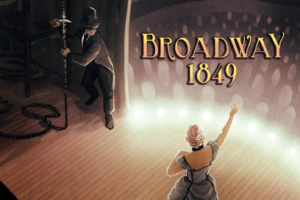
We’re proud to announce that Broadway: 1849, the latest in our popular “Choice of Games” line of multiple-choice interactive-fiction games, is now available for Steam, iOS, and Android. It’s 25% off until November 29th!
Fight your way to box office glory, while fending off the gangs of New York! Manage a theatre in a game of high-stakes business, dangerous romance, and risky alliances set in the rough-and-tumble world of 19th century New York. You’ll brave riots, fires, and political spies as you take on a city of jealous rivals, brilliant artists, and stalwart politicians.
Broadway: 1849 is a 150,000-word interactive historical adventure novel by Robert Davis. It’s entirely text-based, without graphics or sound effects, and fueled by the vast, unstoppable power of your imagination.
Will you succeed by your smart business sense or enlist the city’s gangs to push your competition out of business? Can you manage the diva personalities of your actors? What about a ghost haunting your theatre’s stage?
Are you a flashy producer playing to please the crowd with circus acts? Do you try to earn the respect of the city’s leaders with fine art? Can you wrangle the press into writing the best reviews?
• Play as male, female, or non-binary; gay, straight, bi, or asexual.
• Compete with rivals to stage the biggest shows and gain the largest audience!
• Choose a cast from the city’s brightest talent.
• Investigate the hidden secrets of your theatre.
• Rush to defuse a deadly bomb, or let it explode and plunge the city into chaos.
• Nurture young talent or feed your own ambition for the spotlight.
• Rub shoulders with the city’s most notorious criminals, or bring their misdeeds to light.
• Help a deserving friend escape the clutches of an unscrupulous businessman.
• Join forces with a criminal gang or side with the mayor’s push for order.
When forced to choose you’ll decide whether to fight for peace or let the city burn.
We hope you enjoy playing Broadway: 1849. We encourage you to tell your friends about it, and recommend the game on StumbleUpon, Facebook, Twitter, and other sites. Don’t forget: our initial download rate determines our ranking on the App Store. The more times you download in the first week, the better our games will rank.
Manage a theatre in a game of high-stakes business, dangerous romance, and risky alliances set in the rough-and-tumble world of 19th century New York. Broadway: 1849 is a 150,000 word interactive historical adventure novel by Robert Davis, and Choice of Games’ latest release. You’ll brave riots, fires, and political spies as you take on a city of jealous rivals, brilliant artists, and stalwart politicians. When forced to choose you’ll decide whether to fight for peace or let the city burn. I sat down with author Robert Davis, to talk about the game.
Tell us what inspired you to write about the theatre in the 1840s. This is your background, right?
Yes, I am a nineteenth-century theatre historian and the simple answer is that I love the period. By our standards, New York at the time would have been quite bizarre, almost like the old west. While it had its business centers like Wall Street, and grand hotels and the like, this was also a city that still had pirates sailing up the river. Gangs prowled the streets, and they almost always went to the theatre, where they could expect to spend a night watching two or three plays, eating, drinking, and throwing stuff at the actors or other people in the audience.
There are so many amazing stories from this time. Take, for example, Ned Buntline (real name: E.Z.C. Judson), one of the main characters in the game. He was a sailor, soldier, and writer. A few years before the game starts, he was involved in an affair where he was shot in a courtroom, after which he jumped out the window, got caught and hung. He escaped, and came to New York, where he wrote bestseller novels, got involved in politics, and was eventually put in prison. Later, after the game, he surfaces writing dime novels and plays featuring Buffalo Bill Cody, whose career he more or less launched. I wanted to make sure that stories like his were told. Or, more like: who doesn’t want to go up against that kind of guy?
What kind of world is Broadway set it? It seems like you’ve done a nice job of melding history with modern sensibilities as well as a little of the supernatural.
The 1840s was also probably the decade when New York had the wildest nightlife. Ever. There was food, dancing, gambling of all sorts, and sex alongside art exhibitions, classical music, and moral lectures. You’d find brothels right next to police stations and churches.
This was a time where the audience was very active. The lights in the auditorium weren’t lowered, so everyone could see everyone, and a night at the theatre could have been a raucous affair, even for the educated elite who only wanted to hear some good Shakespeare. We have stories where audiences did things like go on stage to make sure the climactic duel in Richard III was a “fair fight.” There’s even one time where some people smuggled in a sheep carcass to throw at an actor they didn’t like. I actually didn’t put those in the game because I thought they wouldn’t be believable!
I tried to stay as close to history as I could while telling a good story. Almost every character, place, or incident in Broadway is from history or melodrama and dime novels. Your main goal is to produce successful plays, but I wanted to immerse you in the world of the time, so there are incidents and character arcs that I think show what kind of rough-and-tumble world this period was.
As for the supernatural, the first thing you find once you start spending time in theatres is that they all have their ghosts…
What did you find challenging about the process of writing the game?
The way all of the branches and variables can come together is a vast puzzle. The game is so twisty at times and making sure it all fit had me tearing out my hair and drinking extra coffee at times. That said, what I love about ChoiceScript is that storytelling challenges are coding challenges. Anytime that I wanted to handle the plot differently, or introduce a new way to do something, I had to figure out the way to script, which would end up totally changing how I would tell the story. That was (and is) a fascinating, deeply rewarding part of the process.
Are you a fan of interactive fiction in general?
Yes! I love it, but I am actually pretty bad at playing IF. A couple of summers ago, I was taking our cat on walks in the backyard and I had nothing to do, so I played a lot of games. Choice of Broadsides was my gateway drug. Then Meg Jayanth’s 80 Days blew my mind. The way it deals with history and narrative is still an inspiration. I also love anything by Porpentine, Ryan North, and Abigail Corfman.
Can you tell the readers why it’s spelled “theatre”?
Now you’ve asked a question that I’m really passionate about! Today, we generally consider “theatre” to be the European spelling and “theater” to be the American version, but that is actually propaganda! There is actually a lot of scholarship on this (and a colleague of mine is currently writing an article about it), but long story short: some writers and dictionary-makers in the nineteenth century wanted to change a lot of words so that American English would be different than English in Great Britain. At the time of the game, “theatre” would by far have been the main way people spelled the craft, the building, and everything inside it.
What are you working on next for us?
Right now I’m working on an outline for a story that I think can be fairly described as Anglo-Saxon history meets the X-Files. Plus Vikings. You’ll be a chronicler who travels around England investigating mysteries that lead you right into a high-stakes conflict between the English, Northmen, and Faeries. It’s really about answering “what is the point of history?” but there will also be elves, ghosts, and maybe the chance to wield Excalibur.
Short Answer, Bernard-Pivot Style
Favorite word?
Absquatulate.
Favorite flower?
Sunflower.
Profession other than your own you’d like to attempt.
Ship’s captain or archivist.
Profession you’d never want to attempt?
Anything where you have to talk on the phone.
Musical theatre or straight plays?
I like almost anything, as long as it’s old!
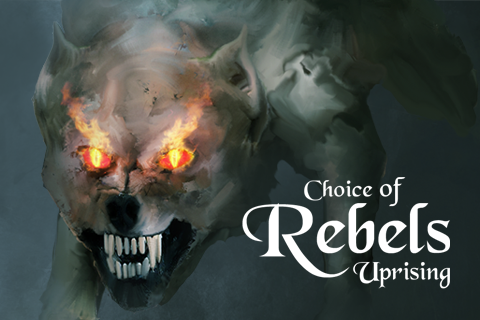
We’re proud to announce that Choice of Rebels: Uprising, the latest in our popular “Choice of Games” line of multiple-choice interactive-fiction games, is now available for Steam, iOS, and Android. It’s 30% off until November 16th!
Lead the revolt against a bloodthirsty empire! You grew up under the iron fist of the Hegemony. Now is your chance to end their blood-fueled magic, as you forge a ragtag outlaw band into a rebel army.
Choice of Rebels: Uprising is a 637,000 word interactive fantasy novel by Joel Havenstone, where your choices control the story. It’s entirely text-based—without graphics or sound effects—and fueled by the vast, unstoppable power of your imagination.
As an outlaw rebel in the greenwood wilderness, you must steal to survive your first brutal winter, or watch your people starve if you can’t feed them. Win yeomen, helots, merchants, priests, and aristocrats over to the rebel cause…or turn them into your worst enemies. Will you defeat the army of the Hegemony’s Archon and the elite force of evil blood mages sent to destroy you, or will a personal betrayal put an end to your rebellion when it’s just barely begun?
• Play as male or female, gay, straight, or ace
• Fight as a renegade aristocrat or defiant slave
• Lead your outlaw band as a self-taught mage, a general, or a mystic priest
• Reform the empire’s religion or start your own
• Master the arcane magic of Theurgy and demolish the blood harvesters of the Hegemony
• Find romance amongst your fellow young rebels
• Root out spies, betrayers, and fend off a mutiny
• Survive attacks from assassins, mages, and the mutant Plektoi hounds
Will you gain a reputation as a compassionate idealist or ruthless insurgent? Can your rebels survive the winter and a vengeful army?
How much will you sacrifice to rebel, and save your homeland from an oppressive empire?
We hope you enjoy playing Choice of Rebels: Uprising. We encourage you to tell your friends about it, and recommend the game on StumbleUpon, Facebook, Twitter, and other sites. Don’t forget: our initial download rate determines our ranking on the App Store. The more times you download in the first week, the better our games will rank.
Lead the revolt against a bloodthirsty empire! You grew up under the iron fist of the Hegemony. Now is your chance to end their blood-fueled magic, as you forge a ragtag outlaw band into a rebel army.
Choice of Rebels: Uprising is a 637,000 word interactive fantasy novel by Joel Havenstone, and Choice of Games’ latest release. As an outlaw rebel in the greenwood wilderness, you must steal to survive your first brutal winter, or watch your people starve if you can’t feed them. Win yeomen, helots, merchants, priests, and aristocrats over to the rebel cause…or turn them into your worst enemies. I sat down with the author to talk about the game. Choice of Rebels: Uprising releases Thursday, November 9th.
Rebels is seven years in the making. Tell me a little about the history of this game.
I started writing Choice of Rebels as soon as I played Choice of the Dragon. (Well, probably after about the sixth playthrough.) I’ve always loved telling interactive stories, but my earlier attempts to do that on a computer always fizzled out thanks to my weak programming skills. With ChoiceScript, I’d finally discovered a language that I could get my head around.
The story grew out of a college Dungeons and Dragons campaign I ran years and years ago. A couple of CoG authors were players (Adam of Choice of the Dragon, Broadsides, and Affairs of the Court, and Rebecca of Psy High and First Year Demons). That campaign centered on a slave revolt against a magic-wielding empire; the players had to weigh their desire to bring down a terrible social order against the dangers of anarchy and the likelihood of even worse rulers filling the gap they’d created.
There are a couple of reasons it took me seven years to complete the first Rebels game. One is that it’s been very much a spare-time project, during a time of my life when I’ve had to juggle demanding day jobs and the arrival of two kids. The other is that as a fan of long, branching stories, I wrote some pretty long branches. I enjoy following ideas and seeing where they lead. Some of the length also stems from wanting to allow meaningful variety between characters; allowing the main character to come from either extreme of the social spectrum, or to be a wizard, religious founder, or military commander, required writing quite a lot of variation into the game.
What kind of world is Rebels set in? What influenced you in writing it?
It’s set in an empire that survives by killing its slave class through blood extraction. This system is also in growing crisis, ripe for the rebellion you launch — though only hints of that crisis are evident in this first game, which is entirely set on the empire’s periphery. Your home province is a sort of Britain colonized by Byzantines, where much of the high culture vocabulary comes from Greek rather than (as in our world) Latin. The world itself appears to work on many of the principles believed by ancient Greeks: four elements, humor theory of disease, an unmoved mover at the heart of the cosmos, and so on. The religion is a sort of nightmare version of my own evangelical Christianity which has thoroughly lapsed into divinizing the social order.
As for influences, can I say “the world of the 2010s”? The game’s evil empire takes its strength from a particular technology, one which it was the first to master and which now underpins its agriculture, transport, security, and industry. That technology requires the sacrifice of life, and while its collapse is foreseeable, it’s built so deeply into the system that it’s hard for the people in power to imagine changing it. Religion and national identity are being used both to challenge and to shore up an oppressive system, and some of the challengers are markedly worse than what they’re fighting. I didn’t and don’t want to write a straight-up allegory, but the parallels sometimes write themselves.
Are you a fan of interactive fiction? What are some of your favorites?
I grew up devouring the paper kind, CYOA and Joe Dever’s Lone Wolf series, and played some early Infocom games like Zork and Hitchhiker’s Guide. These days, I enjoy a range of stuff in the broader IF genre, from Telltale’s Walking Dead to Hadean Lands. There’s a lot of good stuff in CoG and Hosted Games, of course. I particularly loved Choice of Robots and A Study in Steampunk, as well as Sabres of Infinity and its sequel.
What are you working on next?
The next Choice of Rebels game. If this game describes the “Robin Hood” phase of your rebellion — bandits in the wilderness — Game Two will see you spreading the insurgency across the countryside and cities of your homeland. I’m planning five games in all, as your revolt expands beyond the borders of your province and ultimately succeeds in toppling the Hegemony. Then in Game Five, you’ll have to see what kind of new order you can build in the rubble of the old. It’s a big vision, and I don’t plan on working on any other writing projects until it’s done.
Did I mention George R.R. Martin in my list of influences? I probably should have mentioned George R.R. Martin. I’ve got a feeling we’ll be seeing that comparison more as the years go by.
Short answer, Bernard Pivot-style Questionnaire
Favorite color? Green.
Favorite word? Winsome.
Profession other than your own you would like to attempt? Trail maintenance in national parks.
Profession you would never wish to attempt? Politician.
Helot or aristocrat? I’m inescapably an aristocrat, but if I’m playing Rebels, helot all the way.
As part of our support for the Choice of Games Contest for Interactive Novels, we will be posting an irregular series of blog posts discussing important design and writing criteria for games. We hope that these can both provide guidance for people participating in the Contest and also help people understand how we think about questions of game design and some best practices. These don’t modify the evaluation criteria for the Contest, and (except as noted) participants are not required to conform to our recommendations–but it’s probably a good idea to listen when judges tell you what they’re looking for.
If these topics interest you, be sure to sign up for our contest mailing list below! We’ll post more of our thoughts on game design leading up to the contest deadline on January 31, 2018.
Choice of Games is strongly committed to inclusivity. Our audience includes people of many different genders, races, orientations, abilities, ethnicities, and life experiences. We want our games to immerse readers in a world that shows the same diversity, and for people from all backgrounds to see themselves fully reflected in that world.
Therefore, in our contest, inclusivity is worth 10% of the score. When we assess whether a game is inclusive, these are the criteria we use:
Do the characters reflect the full diversity of the society in which the game is set?
Are all types of people (especially groups traditionally underrepresented in media) treated respectfully and non-stereotypically?
If there is romance in the game, are there equally satisfying romance options regardless of the player character’s orientation?
At minimum, if the PC’s gender is stated, then the PC must be playable as male or female. If there is romance in the story, the PC must be playable as gay or straight. Games which do not offer this do not simply receive a score of 0 for inclusivity, they aren’t eligible to be published as Choice of Games titles.
For the last criterion – how to offer good options for romanceable characters – our Author Guidelines give a lot of details and examples. So this blog post will focus on the other two points. We’ll discuss what those criteria mean, give you some best practices for creating an inclusive world, and offer some resources that will help you through your writing process.
Learning how to write inclusively is an ongoing process. We can’t possibly teach you everything there is to know about it, or cover every single detail, in a single blog post. What we hope to do here is to give you some starting points for your own learning process and some tips for how to approach the task. Keep reading; keep learning; keep listening.
Inclusive Environments
Choice of Games titles give the player a first-person perspective within the story. The PC always takes action as “I,” and the narration always addresses the PC as “you.” It’s what makes our stories feel so immediate and immersive: what’s happening to the PC is happening to you.
That means that many players like to construct PCs that match their real-world selves: the same gender, orientation, appearance, etc. Therefore, we want to make sure that as many people as possible can see themselves in the main character. One way to do this is to include as wide a range of options as possible for the PC’s fundamental character traits. Offer names and backgrounds that make it clear that the PC can have many different potential ethnicities, races, and origins. Think outside traditional binaries of gender and orientation. ChoiceScript’s method of handling pronoun variables makes it very easy to add more options. So for gender, include the option for the PC to be nonbinary, genderqueer, genderfluid, transgender, etc. For orientation, include the option for the PC to be bisexual, asexual, aromantic, etc.
But being inclusive means more than having diverse options for the PC alone: it means having that diversity fully integrated into the world where the story is set.
To achieve this, you’ll have to think very carefully about some things that you might usually consider to be “neutral” or “default”. As Chuck Wendig recently said, “not being inclusive is also a political choice” – or, to put it another way, as Foz Meadows wrote, “default narrative settings are not apolitical.” What we consider “defaults” actually reflect deeply embedded structures of power and politics – for instance, the idea that a white character is “neutral” and characters of any other race need a “reason” to be in the story. Make sure that you’re mixing up your defaults, and including diversity in your minor NPCs as well.
Historical settings, both in the real world and in historically-flavored fantasy worlds, are especially susceptible to misconceptions. Kameron Hurley has written very eloquently about how difficult it is to overcome these preconceived ideas. Medieval Europe in particular was much more diverse and egalitarian than it’s often depicted as being. See the end of this blog post for some resources that will help you build an accurate medieval or medieval-fantasy setting.
So, if you’ve got a sword-and-sorcery fantasy game in which the PC is a knight, and the PC can be of any gender, that’s a good first step. But if all the NPC knights are men, then that’s not really inclusive. Likewise, if you include romance in your game and leave open the possibility for the PC to have a romantic partner of the same gender, that’s a good first step – but if all the other relationships that you depict are straight couples, then that’s not really inclusive. The NPCs should represent the same wide range of genders, orientations, ethnicities, abilities, etc. as the PC.
You don’t have to make this a major plot point; in fact, it’s usually more inclusive to not make a big deal about it. Normalizing diversity communicates to the player that the PC is part of a world that contains many other people like them – in other words, showing the player that the PC belongs in that world and isn’t an exception.
There are subtler ways to promote inclusivity beyond the types of people that fill a story. The language that we use communicates ideas about the world and its power dynamics.
Countless casual phrases perpetuate destructive stereotypes. “Man up” implies that only men are strong. Using “crying like a girl” as an insult implies that crying shows weakness, that girls are weak – and therefore, that girls are inferior. “Psycho” demeans people with mental illnesses. Describing a disabled person as “confined to a wheelchair” implies that wheelchairs are a punishment, when many wheelchair users say that wheelchairs give them more freedom and flexibility than they would otherwise have. Like those “default narrative settings” mentioned above, these phrases are so deeply embedded in our common language usage that many people don’t even realize the potential hurt that they can cause, or how they reinforce stereotypes. Being aware of the phrases you use can help you create a more inclusive environment within your game.
At the end of this post, you can find some links to useful websites that will help you fine-tune your prose to make sure that you’re using the most inclusive language possible.
Best Practices
With all of this in mind, here are some ways to work towards an inclusive environment for your game. Again, this isn’t an exhaustive list; no single list can be! These are some starting points for your thought and research.
Think about the structures of power in the gameworld: think carefully about who’s in power and why, and about what kinds of people you place in positions of leadership. Are all the assertive leaders men and all the nurturers women? If so, you should mix things up.
Pay attention to the way you construct scenes. Try switching around the genders or races of the characters: does the dialogue still feel authentic? Does the switch reveal some unconscious assumptions? If a man is chasing another man down a dark alley, it’s a standard action scene, but if a man is chasing a woman down a dark alley, then the scene acquires a very different kind of fear and tension.
Pay attention to the way you describe NPCs. Make sure that when you’re “looking” with the PC’s eyes, you don’t assume what the PC will find attractive or not. Make sure that you don’t assume that one race or gender is the default and another is “exotic” or “different.”
Get a diverse group of beta readers. The more first-person perspectives you can get on your writing, the better information you’ll have about how your audience will respond to your work. You may even want to consider getting an expert reader or sensitivity reader for some more targeted feedback about best practices for representing specific groups of people.
Listen to your feedback. If a reader alerts you to a problem, look closely at that problem and see what you can do to fix it. If you’ve made a mistake, apologize, fix it, learn from it, and do better next time.
If you do choose to include discrimination in your game, either because of the historical setting or to create narrative drama, handle it with respect and care. Understand that discrimination is something that many players have experienced in their real lives. Seeing it represented in a game can make that game feel more authentic, but it can also stir up painful memories and emotions. Take it seriously, don’t treat it lightly, and be considerate of the players’ experiences.
Further Reading
These are some useful starting points for your research about how to write inclusively. There are many many more resources out there on the internet!
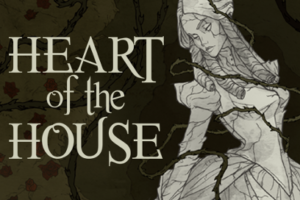
We’re proud to announce that Heart of the House, the latest in our popular “Choice of Games” line of multiple-choice interactive-fiction games, is now available for Steam, iOS, and Android. It’s 30% off until November 2nd!
Destroy the evil at the heart of a haunted manor! As an orphan, you discovered your ability to commune with the spirit world and ghosts. When your uncle Kent mysteriously disappears, you’ll embark on a journey find out what really happened. With your trusty companion Devanand at your side, you make your way to Darnecroy Manor, where Kent was last seen. It is…The House.
Heart of the House is 360,000-word interactive Gothic novel by Nissa Campbell. It’s entirely text-based—without graphics or sound effects—and fueled by the vast, unstoppable power of your imagination.
Within the manor, you’ll encounter the master, Lord Bastian Reaves; his mysterious servants, Oriana and Loren; and the thousands of spirits teeming around and in this haunted mansion. But will you shatter the power that binds the ghosts to the House, or claim it for yourself? Can love bloom in a haunted house? Most importantly, how will you escape, when the House comes for you?
• Play as a male, female, or non-binary; gay, straight, bi, ace, or poly
• Explore the halls of the House, even as they seem to shift before your eyes
• Encounter ghosts, spirits, and echoes, as you search for your lost Uncle Kent
• Fight against an ancient evil or embrace its demonic gifts
• Indulge in steamy, chaste, sweet, or provocative romances, or go it alone
• Exploit the secrets you find for self-serving ends or use them to help your friends
• Defeat your greatest fears in bone-chilling moments of terror…if you can.
• Choose whom you can save, if anyone, from the horrors the House contains
For some, there may be no escape from The Heart of the House.
We hope you enjoy playing Heart of the House. We encourage you to tell your friends about it, and recommend the game on StumbleUpon, Facebook, Twitter, and other sites. Don’t forget: our initial download rate determines our ranking on the App Store. The more times you download in the first week, the better our games will rank.
Destroy the evil at the heart of a haunted manor! As an orphan, you discovered your ability to commune with the spirit world and ghosts. When your uncle Kent mysteriously disappears, you’ll embark on a journey find out what really happened. With your trusty companion Devanand at your side, you make your way to Darnecroy Manor, where Kent was last seen. It is…The House. Heart of the House is 360,000-word interactive Gothic novel by Nissa Campbell. I sat down with her to talk about Victorian gothic goodness and skittering creatures. Heart of the House releases this Thursday, October 26th.
Heart of the House is a perfect Halloween release. Tell me about the world this game is set in.
The larger world of Heart of the House is Victorian England during the 1870s. Not terribly unlike the real one. It’s poised on the edge of a great deal of social and technological change, and still clinging to the ghosts of days past.
Here, most superstitions are entirely practical. Ghouls and specters really do linger all around us and curses are painfully real. As an occult investigator, you travel by coach to Wyeford, a small English town that few people ever visit and no one seems to remember. It could be a welcoming place, but it’s also a strange one, and the manor that watches over it is even stranger.
The manor certainly haunted (what old manor isn’t?), but ghosts are far from the only dangers within its walls. Once there, you find yourself caught up in ancient mysteries and the tangled dynamics of a makeshift family, both of which could be quite hazardous for your health.
Did you have a favorite character to write? I confess Loren is near to my heart.
I’m so glad to hear that!
I adore my characters, every one of them. But Heart of the House is the story of people who are trapped in myriad ways, and while Dev’s constant concern, Oriana’s sharp tongue and Reaves’ Byronic aloofness were fun coping mechanisms to write, I could never stay away from Loren’s irrepressible good cheer for long. Surrounded by so many secrets and so much danger, it’s relaxing to spend time with a person who seems so kind, open and genuine. Even while writing them.
And I loved, loved, loved having the opportunity to write a satisfying romantic arc for them. I’ve read and played more than my share of romance, and people like Loren don’t get happily ever afters nearly often enough.
What did you find most challenging about writing this game?
I expected to struggle with writing in ChoiceScript, but as it turns out, I’m not a very linear writer. Working with branching logic was a natural fit, and ChoiceScript itself is super intuitive.
No, the most challenging part was stopping. In every scene, it seemed like there was always more I could do, more branches I could explore, more choice I could offer. In a novel, you have to commit to a single branch. Here, I could play out all kinds of ideas. Knowing when to say “that’s enough,” with so much freedom is certainly a learning experience. I just hope I struck the right balance between offering everyone satisfying choices and actually finishing the game so they can play it.
On a more personal note, there were certain things I felt strongly about portraying in Heart of the House – like mental health issues and certain elements of gender and sexuality – that are particularly challenging in a Victorian setting. Not because the Victorians were unfamiliar with them, but because the vocabulary was often absent, and social norms were so strict. A panic disorder could be considered an embarrassing but acceptable nervous affliction (if you were fortunate enough to have money and family support) – and at the same time, not meeting society’s ridiculously stringent requirements for gender presentation might well be considered a sign of madness.
Thankfully, since the game takes place in an isolated community with its own unusual norms, I could give my characters much more room to breathe and be themselves than might be realistic in a story that takes place in, say, London during the same era.
Are you a fan of interactive fiction in general? What are some of your favorites?
Absolutely! When I was a kid, my dad kept our PC well-stocked with Infocom’s hits, so I grew up on Zork, Hitchhiker’s Guide to the Galaxy and – my favorite – A Mind Forever Voyaging. I didn’t really pick up on AMFV’s political stance when I was seven, but that game holds up surprisingly well.
Porpentine’s work really pulled me into modern interactive fiction, particularly With Those We Love Alive. More recently, Localhost is a deeply unsettling experience that I adore. Max Gladstone’s Deathless games are wonderful (as are the Craft Sequence novels they accompany), and have outrageously good worldbuilding. Does Kentucky Route Zero count? I feel like it counts, and every act that comes out could be my GOTY. And there are some amazing IF games coming up: Where the Water Tastes Like Wine, Southern Monsters, What Isn’t Saved (will be lost)…
It’s an exciting time to be an IF fan, especially if you like your fiction on the dark side.
What are you working on next?
My game backlog! Honestly, I’m taking some time off large creative projects for the sake of self-care and to clear my head, but it’s already filling up with new ideas. An anthology of games about falling in love with classic monsters. Maybe an extremely human story about being an AI. The necromantic romance novel that I’ve had sitting on the back burner for a while. Planning a Blades in the Dark campaign – it’s been a year since I played in a tabletop RPG, and I’m withering away without one.
But all that waits until I can say farewell to Heart of the House and its inhabitants, so maybe not quite yet.
Short answer, Bernard Pivot-Style
Favorite color?
Teal. Teal and pink, teal and red, but always, always, teal.
Favorite word?
Eldritch. Accursed. Cyclopean. Stygian. I have to admit, the words currently obsessing me all have a distinctly Lovecraftian flavour. Ooh, tenebrous.
Profession (other than your own) you would like to attempt?
Therapist. Working with Take This has shown me how much good mental health professionals can do, and people are endlessly fascinating. It’s fortunate for everyone involved that I can’t just wander into that job on a whim. Given how much I torture my characters, I probably shouldn’t be trusted with real human psyches.
Profession you would never want to attempt?
Pest control. As you might notice in Heart of the House, I have a bit of a thing about all the squirmy, skittering things that are probably lurking under our floorboards right this very moment…[Interviewer’s Note: I love them, but do not google “house centipede” if skittering critters terrify you.]
Are ghosts real?
As literal manifestations of the spirits of the deceased? Not in my experience. But a figurative haunting is still terribly troublesome, and we all have ghosts of our own.
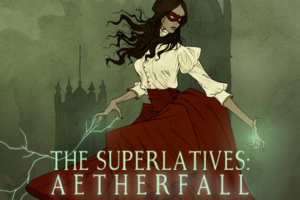
We’re proud to announce that The Superlatives: Aetherfall, the latest in our popular “Choice of Games” line of multiple-choice interactive-fiction games, is now available for Steam, iOS, and Android. It’s 30% off until Octobet 26th!
Lead a superpowered team of “Superlatives” to defend 19th-century Victorian London! Battle a Martian warship, clockwork monsters, and nefarious inventors.
The Superlatives: Aetherfall is a 260,000-word interactive novel by Alice Ripley. It’s entirely text-based, without graphics or sound effects, and fueled by the vast, unstoppable power of your imagination.
The prestigious Society for the Advancement of Individuals of Superlative Talent and the Protection of the Queen has invited you to become their newest member! But on the very day the Society plans to initiate you, unknown Villains destroy the Society headquarters and kidnap your colleagues! As the sole remaining full member of the Superlative Society, you must initiate new recruits to investigate the abduction.
Meet your team: Nimble—faster than lightning; Wailer—a “banshee” with sharp blades and sonic shriek attacks; Arturek—the gruff Martian warrior; Tua—a Venusian who commands the power of plants; and Black Orchid—a strangely familiar new recruit. Your efforts are bolstered by your faithful Clockwork assistant, Gatsby, and your always-butting-in rival, Hallow.
Will your gain your team’s trust and convince them to work together, or will they fall apart under the pressure? Will you cut a deal with London’s Villains, or even turn the Society into Villains yourself? Will you trust the mysterious Dusk and Mr. Ink, who offer you help, or will you uncover their many secrets?
• Play as male, female, or nonbinary; gay, straight, bisexual, asexual, or aromantic
• Draw power from your preternatural nature, alien heritage, or genius gadgets
• Protect the Earth from torrential aetherfalls
• Keep your identity secret from your nosy landlady, Mrs. Rathbone
• Negotiate with minute Mercurian monarchs (Mercurians stand only four inches tall)
• Push your teammates to transcend their origins or pursue their destiny
• Foil the Nefarious Clockwork Contraptions of Dr. Eisengeist and discover his origins
Don your mask, take to the skies, and God save the Queen!
We hope you enjoy playing The Superlatives: Aetherfall. We encourage you to tell your friends about it, and recommend the game on StumbleUpon, Facebook, Twitter, and other sites. Don’t forget: our initial download rate determines our ranking on the App Store. The more times you download in the first week, the better our games will rank.
The prestigious Society for the Advancement of Individuals of Superlative Talent and the Protection of the Queen has invited you to become their newest member! But on the very day the Society plans to initiate you, unknown Villains destroy the Society headquarters and kidnap your colleagues! As the sole remaining full member of the Superlative Society, you must initiate new recruits to investigate the abduction. The Superlatives: Aetherfall is a 260,000-word interactive novel by Alice Ripley. I sat down with her to talk about the world of Superlatives, and more. The Superlatives: Aetherfall releases Thursday, October 19th.
What kind of world is Superlatives set in? It seems to me that it’s not steampunk, but more a magical setting…with an overriding scientific basis for this magic!
There is definitely a steampunk influence to the game, particularly with the gadgeteers, but the focus is more on the superlative abilities. Everything is powered by aether—which historically refers to the substance that fills space, between the stars and planets, and in the Superlative universe is both a physical substance and an energy that flows through every living being. The characters can observe and study it, but it follows comic book science rules—whatever is the most fun is the most probable answer! And on top of that, I channeled some Jules Verne, and definitely drew on Edgar Rice Burroughs to create a solar system populated by sentient Venusian plants and Martian warriors and tiny, excitable Mercurians. The overriding principle of the Superlatives universe is that it contains the things I find delightful (and hopefully you do, too!).
There’s a huge cast in this game. What character did you enjoy writing most?
I’ve gone through many favorites, depending on my mood and which part of the game I was working on. The aliens are fun to dig into, especially trying to work out how their perspectives and opinions are distinctly different from the human norm. I’m also very fond of prickly Wailer, and finding her points of insecurity and vulnerability that make her more complex than she’d like you to think she is. And Dusk gets the best drama. I never could resist a mysterious, shadowy figure.
What did you find most challenging about writing in ChoiceScript? Or was it more the elements of how game design works?
I have some game design background and some experience coding, so there weren’t too many technical challenges, though there’s always a learning curve to a new system and design style. The hardest thing for me was falling into a rhythm with the writing itself. Normally, I build up narrative momentum and get into a groove where the story begins to naturally build on itself; there’s a creative sweet spot that I hit most days, where things just start to flow. That momentum is much harder to generate in a branching narrative, when you have to pause and create choices and consider different contexts, tones, and decisions for each micro-scene.
It can also be difficult to predict ahead of time how long a given set of choices is going to get, if you haven’t outlined down to a very granular level. I tend to work with high-level outlines, and make granular decisions on the fly, which means that I was never particularly close with my word count estimates—which in turn makes it difficult to schedule tasks and gauge deadlines. Lesson learned: more outlining!
Are you a fan of interactive fiction in general or are you more a straight literary fiction reader? What have you been reading in your (ha!) spare time?
My first real job was writing for an narratively intensive video game all about branching storylines. It didn’t end up making it past the “episode one” script, but it hooked me on the concept. I’m intrigued by the use of branching and choice in games, and I tend to prefer games with some element of player-driven narrative.
Outside of games and interactive fiction, I read very widely. I’m in a bit of a history and military memoir kick right now (recommended: The Coldest Winter, about the Korean War). Over the summer my standout favorites were The Bear & The Nightingale, which is a gorgeous take on Russian mythology, and Megan Abbott’s You Will Know Me, which is sort of a crime novel but mostly a very dark and intricate look at a family driven by obsession with their eldest child’s talent.
Short answer, Bernard Pivot-style:
Favorite color?
Some shade of red.
Favorite word?
Too many good ones. I like words that have music, and words that have artful precision. You can discover amazing words and accidental poetry by reading Wikipedia articles about obscure subjects. Mycology has the best phrases: the “adnate lamellae of polypore-like fungi” and “various basidiomycetes” and “Gomphus has false gills.”
What profession other than your own would you like to attempt?
I loved both writing and visual art from an early age, and I could have leaned toward either one. But I knew I would only get as good as I wanted to be by letting one of them become my obsession and my complete focus, and I chose writing. I still draw and paint when I can, but I’d love someday to have the dedicated time to obsess over my art for a while.
Which would you not like to attempt?
Anything involving sound design. As I discovered trying to choose sounds for a mobile game I was a designer on, listening to repetitive noises makes my skin crawl and gives me anxiety. And for the life of me I could not tell the difference between those sixteen different types of “sproings” and “doings” and “boops” and “bonks.”
If you were yourself a Superlative, what would your ability be?
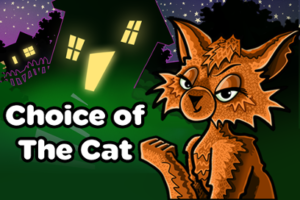
We’re proud to announce that Choice of the Cat, the latest in our popular “Choice of Games” line of multiple-choice interactive-fiction games, is now available for Steam, iOS, and Android. It’s 30% off until October 5th!
Knock things over. Take a nap. Enslave humanity. Power, fame, and catnip are yours for the licking!
Choice of the Cat is a hilarious 600,000-word interactive novel by Jordan Reyne, where your choices control the story. It’s entirely text-based, without graphics or sound effects, and fueled by the vast, unstoppable power of your imagination.
It’s the biggest text-based cat simulator ever written; play it many times as different kinds of cat! As a rescue cat, looking for a family to love and obey you forever, you find yourself sharing a home with a family on the brink of divorce. You’ll learn to manipulate your owners, their neighbors, and even their other pets to get what you want. (The humans think they’re in charge! Aren’t they cute?)
Show your new family the meaning of unconditional love, rule by fear alone, or play them against one another for your amusement. Become a YouTube sensation when videos of your lovable antics go viral, or meddle from behind the throne as your owner family begins to take over the government.
Who’s an adorable, tyrannical kitty? YOU ARE. Will you sharpen your claws and mete out feline justice, or melt their hearts with purrs, meows, and cuddles?
• Play as male or female, or dispense with gender constructs
• Enjoy over half a million words covering cat lore, how to rule the planet, and what to do with a dead fish
• Save your owners’ marriage with kindness, or rip them apart with your tiny little claws
• Delve deep into the psyche of man’s second best friend, or become their first best friend, if Bene the dog lets you.
• Take revenge on those who cross you or your allies, or rescue the innocent using clever, quieter tricks
• Become a hero among cats, or pick on humans, and ruthlessly destroy a troubled marriage
• Enjoy luxurious carpets, curtains ripe for shredding, and belly rubs from your owners
• Shred and steal things, mark your territory stinkily, and cause fires
• Mess with vital political phone calls–or opt for clever calming tactics so your humans reach their goals
• Help your owner earn a recording contract from the music mogul next door, with the help of his cat
We hope you enjoy playing Choice of the Cat. We encourage you to tell your friends about it, and recommend the game on StumbleUpon, Facebook, Twitter, and other sites. Don’t forget: our initial download rate determines our ranking on the App Store. The more times you download in the first week, the better our games will rank.

 Steam
Steam Twitter
 Facebook
 Tumblr
 RSS Feed